Sometimes you just need to take a day off.
And while you’re at it, a little snacking is good too.
Because the future has just started
Sometimes you just need to take a day off.
And while you’re at it, a little snacking is good too.
I saw this at my local grocery store yesterday afternoon, and I thought it was completely delightful.

Today is Pi Day, all across the world, and many celebrate. Some celebrate with a slice of pie, and others just try to think well-rounded thoughts.
Yet there was a moment today that was the actual Pi moment. That moment deserves to be recognized in its own right.
The Pi moment occurred today a little before 2:00 a.m. this morning. Specifically, it occurred about 26 1/2 seconds after 1:59 a.m.
The precise Pi moment happens every year on March 14th at 1:59:26.53589793… in the wee hours of the morning.
Of course that is just an approximation. I would write down the exact time, but then this blog post would become too long.
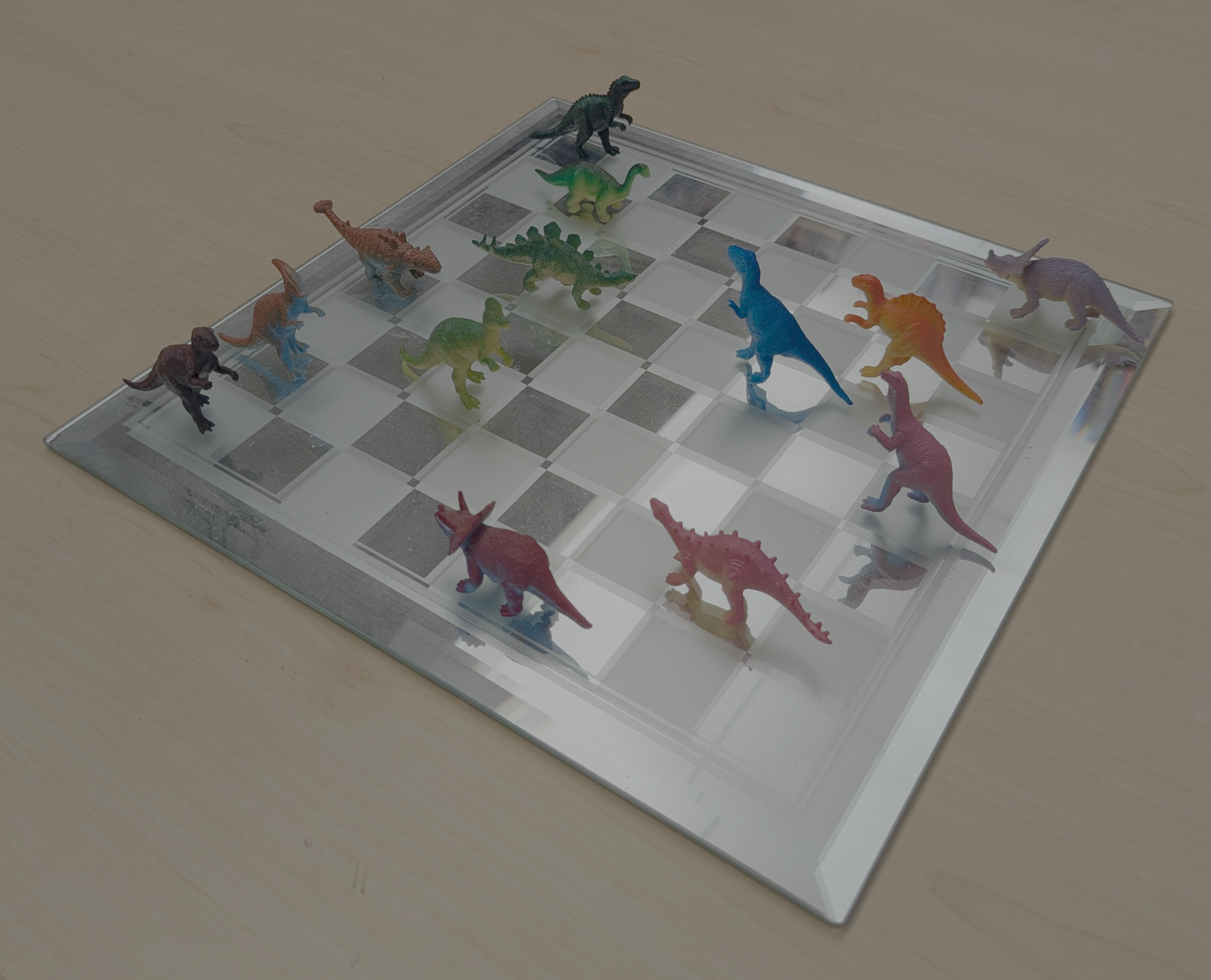
I’ve really been getting into dinosaur chess.
More and more software engineers switch from actually writing code to vibe coding. Actual coding is a relatively slow process, in which you are responsible for writing every line of code of a computer program.
Vibe coding is a much faster technique. You tell an AI what you want via prompts, and it writes the code for you. If you don’t like the result, you modify the prompt. Rinse and repeat.
Vibe coding can be much faster than old fashioned programming. What might have taken days might be done in only an hour or two.
But there is a flaw in the paradigm. Vibe coding only works because the AI has scraped the code from millions of programs that were created by actual humans. In a sense, the AI is acting as a collage machine, piecing together patterns found in many snippets of human code to create its new results.
Once everybody switches to vibe coding, there will be no more human code. It will all just be combinations gleaned from the legacy of the old days, when human beings with actual brains put actual thought into coming up with new patterns, and writing those patterns in the language of programming.
Will that signal the end of a key part of programming — of the underlying ideas that make it powerful? Without new infusions of human-generated code, will humanity find itself facing a conceptual wall?
And if so, will future generations look back with regret? Are these the last days of a golden age of computational innovation?
One question that keeps coming up in our research lab at NYU is to what extent interaction in two dimensions is intrinsic to humans. After all, until now, pretty much all of our interaction with information has been via text, buttons, sliders, etc, arranged on on flat planar surfaces.
Did we develop those kinds of interfaces because our brains are predisposed, biologically, to think in terms of 2D images? Or is the development of such interfaces mainly the result of technological limitations?
This isn’t just about computers. Our preference for interacting with shapes on flat surfaces long predates the development of computers. Think of elevator buttons, or piano keyboards, to take just two examples.
If in a few years we are all wearing mixed reality glasses, and we can see information floating in the air all about us, will that change how we design information interfaces? Will our reality start to resemble a scene of Tony Stark interacting with Jarvis?
Or will we just end up with more places to put those good old 2D interfaces that we seem to like so much?
I was comparing notes with some friends, and we found that we all have something in common. We achieve a kind of high by working on something that requires precision.
In my case it’s computer programming. If even one comma or parenthesis is out of place, your program simply will not run.
For somebody else it was practicing classical piano. For yet another it was draftsmanship.
But in all cases, the need to do something exactly right, without making any errors, creates a kind of psychological high. Once you get into the zone, you really want to stay there.
I know that there are many different ways of getting high. But this one has the nice advantage that you are actually getting stuff done.
As you know, it is no longer acceptable in the United States to talk about DEI, which stands for Diversity, Equity and Inclusion. Ever since the administration started gunning for DEI, I’ve been wondering what would replace it as a guiding principle.
I think I have finally figured it out. The key is to observe our president, and see what truly matters to him.
For example, it is no longer acceptable to ask for any special dispensation because of historical unfairness to black people. But now it is acceptable to ask for special dispensation because of historical unfairness to white South African Afrikaans people.
Let’s take another example. Apparently when you start a Big Beautiful war these days, the first thing you need to do is kill 165 schoolgirls with a Big Beautiful tomahawk missile. To be fair, this is much more efficient than harming schoolgirls one by one on a friend’s secret island.
There is something perverse about all of this, but I believe perversity is exactly the point. The goal seems to be to do everything possible to make America great again for white people, while preventing all those annoying non-white people from thinking that they also belong in the club.
Of course any good policy needs a good acronym. I propose one that is short, accurate, and quite descriptive: PIE, or Perversity, Inequity and Exclusion.
Suppose, hypothetically speaking, that the leader of a large Western democracy was voted out of power, and then put on trial for corruption. But now suppose that while in office, said leader had managed to use his position to amass vast wealth, both for himself and for his very powerful friends.
So here is a question: How much wealth would he need to buy his way out of a guilty plea?
Ideally, there would be no such possibility. Yet we have already seen that in large Western democracies money talks. And if you are rich enough, your money practically shouts.
So I suspect there is some dollar figure that would do the trick. One with the magic power to spring open the locks of all jail doors.
Hypothetically speaking, of course.
The last few days, for the first time, I find myself wondering whether our idiot government has finally managed to plunge the world into World War III.
More and more countries are being sucked, reluctantly, into the conflict. It’s like watching a row of dominoes falling, one after the other.
I very much would like to be wrong.