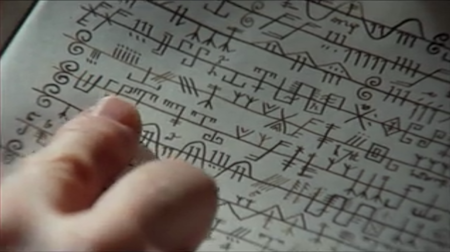
Future present perfect

The present perfect tense allows us to say things like “She has been department chair for two months”, or “I’ve known him for ten years.”

We often see such statements in resumés and biographies. And every time the present perfect is used, the situation it describes is poised to go out of date by the next year or month or day or hour or minute.

Since so much modern text is digital, designed to be seen on-line or in other electronic form, why don’t we have a way of dealing with this?

For example, on-line documents could contain a since tag, enabling statements like “She has been department chair for XXX months” to remain up to date:

“She has been department chair for <since start=”november 2012″ unit=”month”>.”
“I’ve known him for <since start=”2002″ unit=”year”>.”

Cybermandering

One of the banes of representative democracy is the practice of gerrymandering — drawing political districts in bizarre ways so as to concentrate the political power of a single party.

It occurs to me that the internet has been performing a bit of its own gerrymandering. It used to be that people with similar political affiliations in different parts of a country (say, New York and Seattle), had only a limited sense of shared community. In order to hang out with far flung members of your political tribe, you needed to get on an airplane and go there.

Now of course we have many and diverse electronic fora that allow us to build and fortify these political coalitions. People can spend their time “hanging out” with likeminded citizens whilst collectively tuning out the voices of those with whom they disagree. For right and left alike, political discourse starts to become ever more of an echo chamber, reflecting back one’s own preconceived ideas.

I wonder whether, in a supreme irony, the very ease of communication afforded by the internet has led to the extreme polarization we’ve recently seen in our country. By creating better bridges of communication that transcend geography, we may have enabled a new form of gerrymandering.

The Artist

Finally saw The Artist, and was amazed and delighted by how successfully the idiom of the silent film can work for a modern audience, when created with an understanding of the sensibility of that audience. And the sheer depth and beauty of the black and white cinematography!

Silent films are so very physical. The faces and bodies of the actors, and the way the light and camera placement capture those faces and bodies, carry the weight of the emotion of characters and their relationships. There’s just something so wonderfully primal about it, this direct expression of mind through face and body, without the distraction of all those words.

That very physicality makes me wonder — perhaps somebody should try to make a silent 3D movie. I’ll bet the two forms would work splendidly together!

Planting a seed

I was talking with some friends last night about Will Wright’s game Spore. Someone remarked that it wasn’t as successful a game as The SIMS. I responded that Spore may have suffered from being ahead of its time.

“Think about it,” I said. “All of those eight and nine year olds who spent countless hours in 2008 making their own creatures. Those kids were not just being players, passive recipients of entertainment. They were being creators. As those young people hit their teen years, they are going to have much higher expectations of themselves.”

If the seed planted by Will takes root, then Kurt Cobain’s despairing GenX cry of “Here we are now, entertain us,” will be replaced by its opposite. Millennial kids, having tasted the power of creation, having been trusted to exercise their own artistic muse, won’t settle for anything less.

Dive bar

An old friend was passing through NY, and we went for a drink and to catch up. We deliberately chose a complete dive — one of those old dimly lit holes in the wall that smells like stale beer and has old wood tables covered with the scratched graffiti of rebellious generations past. It was so much nicer than going to a proper restaurant, or to one of those hoity-toity wine bars scattered about the city.

It’s a curious irony. People spend so much money to go out to fancy places in Manhattan. Yet choosing a somewhat disreputable place, the kind of place where nobody cares who you are or what you do, can give you far greater value on a psychological level than meeting at some posh locale. A dive bar, by its very nature, is telling you and your friend: “You don’t need to impress us, or worry about us at all. Enjoy hanging out with each other. We’re just here to serve the beer.”

All that, and the beer is cheaper too. 🙂

DC Plans Prequels to Moby-Dick

Watchmen, one of the most influential comic-book works of the last 25 years, is about to yield additional chapters, a plan that has already drawn the outrage of its original author. On Wednesday DC Entertainment is expected to announce that its DC Comics imprint intends to publish seven comic-book mini-series that will continue the stories … But Mr. Moore was unconvinced, saying that the endeavor only weakened the argument that comics were an authentic form of literature. “As far as I know,” he said, “there weren’t that many prequels or sequels to ‘Moby-Dick.’ ” – From an article in the NY Times, Feb 1, 2012

New flash: On Wednesday DC Entertainment is expected to announce that its DC Comics imprint intends to publish seven comic-book mini-series that will continue the stories of the adventurers introduced in Moby-Dick, which was written by Herman Melville.

First published in 1851, Moby-Dick chronicles a group of whale hunters who find they are as powerless to solve their personal problems as they are to catch an elusive great white whale.

The new mini-series, collectively called “Before Moby-Dick” and scheduled to start in the summer, will not be direct sequels to the original, which has been widely praised for its sophisticated storytelling and for its emphatic (if deliberately ambiguous) ending. Instead a new group of writers and illustrators will expand on the back stories of the Pequod crew, like Ahab and Starbuck.

“It’s our responsibility as publishers to find new ways to keep all of these characters relevant,” Dan DiDio and Jim Lee, the co-publishers of DC Entertainment, said in a statement. “After 161 years these are classic characters whose time has come for new stories to be told.”

Complete plans for the series have not been officially announced, but we have been able to learn about a few of the story lines from a source within DC Entertainment who wishes to remain anonymous, due to contract negotiations and commercial tie-ins still in negotiation. Our source reports that the series will include “Call me Ishmael”, about the narrator’s life before the Pequod as an apparently mild-mannered schoolteacher, an identity that was actually a cover for his true mission as a fearless costumed fighter of crime.

Then there is Ahab, whose past as a sea captain was a thin cover for his true identity as “The Whaler”, a fearless costumed fighter of crime. Upon catching evil-doers, the intrepid lone crime-fighter was famous for shouting “To the last I grapple with thee; from hell’s heart I stab at thee; for hate’s sake I spit my last breath at thee,” after which he would throw a harpoon at the thoroughly confused miscreant.

Starbuck also gets his own series, centering on his earlier life as a young man in Nantucket, where his repeated and comically failed attempts to open a chain of coffee shops served as a convenient cover for his true mission, together with his intrepid wife Mary, as fearless costumed fighters of crime. Their many heroic deeds of crime fighting utilized advanced technology they developed within their secret laboratory on Starbuck Island in the central Pacific. Spielberg has expressed interest in obtaining film rights.

At press time, Herman Melville was unavailable for comment.

Generalized talkies

Yesterday I framed a subject (games for learning) in a specific way: The difference in perceived value of something before and after it has found its way into general use. This might be thought of as the “generalized talkies” problem, since the added value of spoken dialog in movies couldn’t have been completely clear to the general public until actual talking pictures started getting made and distributed.

This pattern shows up repeatedly. Automobiles were seen as either a curiosity or an annoyance in their earliest years. An entire industry initially missed the significance of Post-It notes. And of course there’s the Web. Back in 1992 very few people could have seen the eventual transformative impact of the one-two punch of easily authored hyperlinks and the image tag.

I wonder what new technologies are emerging right now that will turn out to be the new talkies for our era.

Talkies

During a conference call today at our Games for Learning Institute, somebody on the line asked why we think games can be good for learning. My colleagues and I have been completely immersed in the science of this for the last few years, and it was refreshing to hear such a basic question.

The many parts of the answer include better ways to motivate learning, the ability to tailor teaching to each individual learner (and to that learner’s current level of skill in each part of a subject), methods of evaluation built right into the learning experience (potentially replacing formal tests, as well as the bane of “studying for the test”), better ability to do reliable large-scale assessment of the effectiveness of any given learning product, better ways to bridge the gap between formal (in-classroom) and informal learning, and the potential to give a teacher more complete and nuanced insight into the progress and needs of each individual student.

But at the moment the question was asked, I didn’t think about those things. Instead, my mind flashed on the mid 1920s, in those last years before talkies replaced silent movies. Faced with the idea of people talking at audiences from cinema screens, it would have been reasonable for Jay Gatsby or Daisy Buchanan to wonder why anyone would do such a thing. Such a disruptive change might have, within their frame of reference, seemed absurd. After all, wouldn’t all that incessant chatter simply take away from what movies were really about — moving images?

Truth

Have you ever had a realization what was causing a problem between you and another person, but were unable to express it? So much of what goes on between people is based on layers upon layers of social protocol that dilineate what we can say and what we can’t, that I suspect it’s actually painful for most people to break through those barriers, even when a situation calls for truth. And the ability to recognize and express difficult emotional truth is not a skill they teach you in school — at least not where I come from.

One of the appealing qualities of fiction is the opportunity to see people, on occasion, transcend those barriers. Of course in movies and theatre the entire situation has been carefully arranged to make this possible. Such a scene is meticulously sequenced, paced and staged, culminating in an apparently spontaneous moment of truth, which in reality was written and refined by professional writers over the course of months, and delivered by a highly trained actor. Often with, I might add, very flattering lighting.

Out here in the real world we don’t have this luxury. So how do we express these truths to each other? They say that alcohol has such an effect, but “in vino veritas” is largely an illusion. We rarely speak truth when drunk. Rather, we spout convenient epiphanies that merely sound like truth to a sodden mind.

If there were a pill we could take that would allow us to say exactly what we wished to say to each other, would people take that pill? Or, dangerous as such a thing almost certainly would be, would it immediately be declared illegal?

What’s in a name?

Today I saw “Being Elmo”, the excellent documentary film about Kevin Clash, the immensely talented fellow who does the voice and puppeteering of the beloved Sesame Street character Elmo. Clash also created the character and personality of Elmo as we know it today.

Young Kevin first entered the Henson fold through the generosity of Kermit Love, Jim Henson’s long time chief puppet maker (not, by the way, the inspiration for Kermit the Frog, who had existed for ten years by the time Henson and Love first met). Kermit Love took the talented young man under his wing and became his mentor, eventually talking Jim Henson into hiring the young puppeteer.

The film mentions that Clash’s big breakthrough in developing Elmo was to conceive of him as a character who both accepts and offers unconditional love — a marked departure from other Muppets, who are generally rather prickly.

Interesting that Kevin Clash came up with this beloved character while being mentored by a man who just happened to be named Kermit Love. Think about it: Elmo is the most popular muppet because he successfully combines two powerful memes: Kermit the Frog and Unconditional Love.

Mere coincidence? Or simply the Universe enjoying a happy little joke?