The Zombie Vampire Continuum Hypothesis

Following up on all the great comments from yesterday’s post, suppose we take as a working model the idea suggested by Alec’s comment — that our instincts toward the nearly-human “other” are not merely influenced by our past history with Neanderthals, but in particular both by warring with them and by mating with them.

This model would suggest that our instincts about monsters are informed by both a joy in killing them and a sexual attraction toward them. Which leads to what might be called the “Zombie Vampire Continuum” (ZVC) hypothesis: Because of our prehistoric relationship with Neanderthals, we have both a blood lust toward “nearly human” monsters and, well, the other kind of lust. A monster will therefore lie on a continuum between “a being that I want to kill” (Zombie) and “a being that I am sexually drawn to in a way that scares me” (Vampire).

Note how this parallels the repulsion/attraction that adolescents feel as they approach sexual maturity, which is generally reflected in archetypical fairy tales: Little Red Riding Hood wants the Wolf to be killed, but she also finds him seductive.

Perhaps our species’ unique relationship to sexuality is informed by instincts we acquired while interacting with rival sentient species, most recently the Neanderthal: We think of sex as dangerous, and at the same time we find killing sexy.

Orcs

Today in his closing keynote at the Games for Change conference, Jesse Schell floated an interesting theory. Why, he asked, do we have Orcs? Or more pointedly, why do we have a pervasive cultural trope of dumb yet violent humanoid monsters that we kill without remorse?

We call them, variously, trolls, ogres, flesh eating zombies, lizard men, or a host of other names, but they are always pretty much the same. They are stupid, they are violent, there are lots and lots of them, and we create highly popular fictional entertainments around the premise of gleefully mowing them down.

We don’t do this with other species. There are no happy fantasies of killing hundreds of chimpanzees or bonobos (well actually, we do send the members of other species to outrageously painful and horrible deaths in large numbers, but we try to pretend we’re not doing anything of the sort). No, we only create entertainment fantasies around the killing of creatures that are sort of like us, distinctly human in their way, only more stupid and more violent.

Jesse’s theory for why this is so came as no surprise: That this drive to kill Orcs is a holdover from our instinct to kill off our real life near-human rivals — the most recent of these, of course, being the Neanderthals, who died out only around thirty thousand years ago.

There have been many theories as to why the Neanderthals died off, but Jesse’s theory is quite simple — we killed them. Why? Well, in his exact words: “I think we killed them all because that’s how we roll.”

It’s hard to judge these things, but to me his theory has the ring of truth. And this idea of an instinctive basis for antagonism toward “the human-like other who is different from my tribe” goes a long way toward explaining the extreme idiocy of racism.

After all, no human mind that is functioning rationally would sanction singling people out for completely nonsensical reasons, say because their ancestors happen to be from Africa, or from Italy or Ireland, or because they are gay, or Jewish, or some other artificially labeled marker of “differentness”.

And yet we know that it happens all the time. I find Jesse’s theory appealing because it explains the complete lunacy of racism. Whether they be antisemites, or homophobes, or just averse to people with red hair, people suffering from this sad affliction are simply playing out left-over survival instincts from long ago.

Deep down, on an instinctive level that their rational minds cannot access, such people think they are still fighting the Neanderthals.

Be here now

Ram Dass famously said “Be Here Now”. Yesterday, really for the first time, I started to wonder whether this powerful idea has become a thing of the past.

Because yesterday I attended a talk by former Vice President of the United States Al Gore, who was giving the opening keynote at the annual Games for Change conference. Mr. Gore was quite charismatic in person, although he had an alarming tendency to answer questions any and all topics by talking about climate change (alas, an inconvenient truth).

But what struck me, sitting in the fourth row of a quite nice auditorium, was the luminescent sea of white between me and the stage. The people in front of me were all surfing their iPads, the bright alabaster glow from their screens dominating the view.

Curious, I started reading over their shoulders. Most people turned out to be “multitasking” (the polite word for it). One guy was randomly surfing the web, another was checking out the next day’s talks, and the woman most directly in front of me was closing a top-secret business deal by email (all very hush-hush).

The most surreal moment came during the Q&A, when Mr. Gore said, as part of his response to a question about the usefulness of serious games in raising consciousness (this is an exact quote):

“All of us should live completely in the present moment all the time, but none of us do.”

Definitely the spirit of Ram Dass, if not the pithiness. Yet I’m not sure, between the emailing and web surfing, whether most the people in front of me even heard him say this.

Which is, um, ironic.

Grand piano

A grand piano stood just as it should within the square
The young boy played aloud, there was a crowd assembled there
They smiled at the tune, for it was June. And by and by
A perfect summer day they whiled away. The Sun rose high
She smiled down with joy upon the boy. All days must end
And melt within your hand, but understand my friend
A grand piano stood just as it should within the square
So it shall ever be. For we, you see, were there.

Harmonics

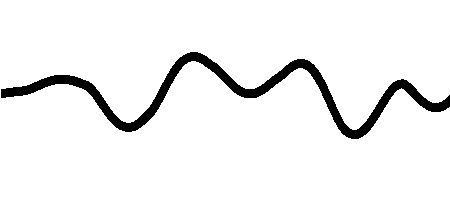
Musical notes generally consist of a mix of harmonic overtones. There’s the fundamental tone, which has some frequency of vibration, and then different amounts of overtones having twice that frequency, three times that frequency, and so on.

When I was a kid I always wanted some kind of gadget that would let me play around with the harmonics of notes, so I could hear what different mixes of harmonic overtones add to the sound of a musical note.

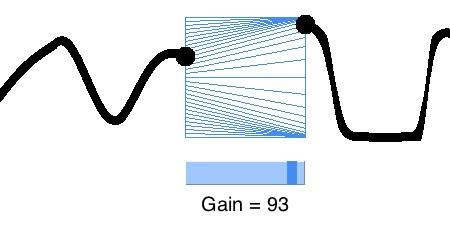
Now, through the magic of computers, I can make one of these for myself, and I thought it would be nice to share.

I’m sure I could find a tool somewhere on the web that does the same thing, but it was fun go all DIY and make one for myself. Click on the image below to jump to the Java applet:


Pain perdu

“Pain perdu” — literally “lost bread”, the french term for what Americans call french toast. The idea of “lost bread” derives from the fact that bread in France is usually bought as a baguette, baked so as to be soft and delicious for just a single day. After that the bread starts to become hard and to lose its freshness. Bread that has been “lost” in this way is repurposed to make what we in the U.S. call french toast.

“Pain perdu” is indeed a fabulous term. When a french friend explained it to me, I told him it sounded like Marcel Proust’s famous memoir, except it would need to have a slightly different title: “À la recherche du pains perdu” — which might be a nostalgic multi-volume memoir about french toast.

When I said that, my friend laughed and told me that such a memoir would have to talk about Proust’s old girlfriend Madeleine (which makes sense if you’ve read Proust).

So I told him that in England the recipe might show up in a memoir by Lady MacBeth about her annoying little dog Spot (the one who is aways running underfoot, and never wants to go out when he’s supposed to). 😉

A dream couple

I was having the most wonderful conversation today with a man, a friend, who had asked me what I thought of his wife and him as a couple.

I told him I thought the two of them were perfect together because they complemented each other so well. Whereas he always seemed calm and centered, she was flighty and full of nervous energy. Somehow their two energies just fit together.

But it was more than that, I continued.

After knowing them both for a while, it had become clear to me that underneath his serene veneer, my friend was not at all as calm as he seemed. In fact, his air of quiet assurance was a way to deal with an inner feeling of alarm and nervous worry, whereas his wife was actually quite calm and centered underneath her appearance of nervous energy. And it was on this deeper level that their relationship truly worked well — still as a fitting together of complementary opposites, but not at all in the way one might at first think.

And then I woke up and realized that it had all been a dream — the man, the woman, my long answer to his question, our entire conversation.

Yet as I am thinking about it now, I suspect it wasn’t just a dream. I may simply have been reviewing, in my sleep, the hidden truth about every successful relationship: We are each our own opposite, and we fit best with someone who complements our own contradictory self.

French airport

Am writing this from the international Air France terminal at CDG airport in Paris. The flight has been delayed by two hours because of mechanical failure on the plane’s exhaust system, and they are getting us a nice new refurbished plane. I am not complaining mind you — I would much rather fly two hours later than try to set off across the atlantic on a jumbo jet with a busted tailpipe.

But it does provide occasion for a more in-depth exploration of this wonderful airport. Because yesterday was a holiday in France, everyone seems to have done their air travel in and out of Paris already, and the airport is refreshingly empty today.

An airport full of people can be a stressful experience, but an empty airport can be rather pleasant — especially here in Paris, where they have not caught the dread American disease that I fondly refer to as “let’s play loud non-stop music everywhere until people are ready to claw out their eyeballs in frustration”.

No, in France they are more civilized than that. And the espresso is better, IMHO. 🙂 If you need to be stuck in an airport for several hours, I highly recommend a french airport.