This evening I saw The Counterfeiters, the winner of this year’s Academy Award for best Foreign Language Film, and an extremely powerful and moving film based the true story of how one small group of Jews escaped extermination in the Nazi concentration camps. I know it’s probably hard to read that and then say to yourself: “Oh yes, what a lovely idea – let’s go out on a Saturday night and take in a nice film about the Holocaust.” But it is a masterfully made film, and that means that it works thoroughly as gripping drama. And indeed, this evening the audience was on the edge of its seat from beginning to end.
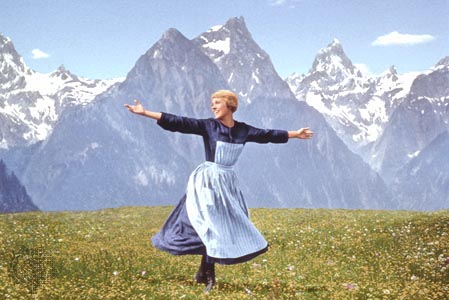
You have to hand it to the Austrians. When they set out to make a film about outwitting the Nazis, they end up with something as honest and searing as this. When we tackle that theme here in the U.S., we end up with The Sound of Music. Well, ok, that’s not really fair. Sorry. Hogan’s Heroes.
One thing that really struck me about the film (this is not giving anything away) was the fact that the label “Jew”, used as an excuse for the Nazis to round people up and throw them into concentration camps, was presented as just that – a label. In the film, none of the victims ever says or does anything that we would think of as expressing a Jewish religious or cultural identity.
I think that was a good choice. It effortlessly gets across the true evil of what the Nazis were up to. Nothing that happened to the Jews during that terrible period actually had anything to do with them at all. It could just as well have been “the left handed people”. The scary brilliance of this aspect of Nazi strategy was precisely that it was based on nothing. If you give reasons, people can argue with you. But if you simply assign labels, just declare someone to be a non-person, then there can be no argument.
It makes me think about prejudice against black people in this country. And the fact that it actually has nothing to do with black people. That’s kind of the elephant in the room, isn’t it? Prejudice against black people is actually a sickness of white people. Similarly, prejudice against homosexuals is a sickness of heterosexuals. The people being prejudiced against are “involved” in pretty much the same way that the person who has been hit by a drunk driver is involved. Yes, they end up getting their bones broken, but no, it is in fact not their fault that this thing happened to them.
My father is a very wise man, and he often has extremely simple and elegant ways of conveying powerful insights. I remember that once he told me that when he was a young man, there were two things that “everybody knew” about Jews in this country:
- They are money-grubbing capitalists who care about nothing but getting their hands on money any way they can;
- They are dangerous Marxists, intent on doing away with private property, who are scheming to impose their radical communist ideology on an unsuspecting America.
If you examine the above statements, you find that they are in fact polar opposites of each other. Each one, if true, renders the other false. And yet everybody knew that both statements were true; it never seemed to bother people that they were going around thinking two opposite thoughts at once.
Maybe this is a useful way to get a handle on prejudice, and to understand why prejudice is so difficult to fight. You can think two opposite and incompatible things at the same time only by shutting off your rational facility to detect the contradiction, and replacing that facility with some counterfeit process. In other words, you must become neurotic.
What is the cure for an entire society in the grip of neurosis?