Green cheese on the moon, continued

On this lunar green cheese question, I’m tempted to agree with Brad. There doesn’t seem to be any upside to having a “debate” when the person wiith whom you are “debating” is simply affirming core beliefs that cannot be demonstrated to be either true or false. None of which particularly matters, until people start getting all emotionally worked up about those things, and start to insist that you must be a player in their drama..

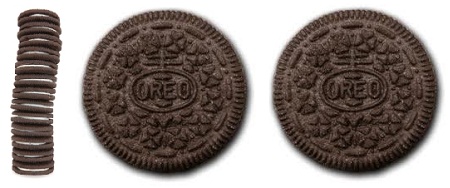
There aught to be a way for those of us who don’t want to argue the pros and cons of such subjects to indicate that we are opting out of these debates. I propose some sort of logo, perhaps something we can wear on our lapel, and point to when such things come up. Here is my humble attempt at a design:


Feel free to copy, or mount on a hat, pin, or T-shirt. When asked what your beliefs are on [BLAH BLAH], simply point with pride to your lapel and explain: “No green cheese”.

Green cheese on the moon

Suppose somebody comes up to you and wants to seriously engage you in the question of whether the moon is made of green cheese. The person is very serious, earnest, wants you to understand that this is an important matter.

What should you do? Should you laugh in their face? Excuse yourself politely?

Let us further say that you have agreed to hold this debate, and you somehow let it slip that you think the entire idea of the moon being made of green cheese is absurd.

The person is now mad at you, as any believer in lunar green cheese would be. But you can probably shrug this off.

What happens when a lot of people want to engage you in this topic? What happens when it seems very important to these people, this question of the green cheesiness of the moon? There are debates, seminars, experts flown in from all over the world to participate in the anxious arguments on this topic.

If, in such a climate, you say “I don’t believe in green cheese on the moon,” then it will be seen that you have chosen sides – you are in the “no green cheese camp.” This is the way many will see you. In a sense you will be defined by this question, and your negative answer to it. You will become, in people’s eyes, the green cheese disbeliever.

In such a scenario, it doesn’t matter how many successes and compliments you recieve in life. You are the “green cheese disbeliever”, and so you shall remain.

Am I the only one who finds something wrong with this picture?

Trains and cats

It was good to see K. again, but three days in his company was quite enough. The man is completely mad. To distract myself I have taken the train to Boston. I am now happily ensconced in the lovely house of a friend in Cambridge. As I type this, I am surrounded by several curious cats. They don’t seem to mind that a stranger has invaded “their” room, but it is clear that they each expect a certain degree of attention and loving tribute.

Sometimes I suspect that cats view us as pets. When they have time for their domesticated humans – between more important affairs – they try to train us. They probably think we are rather slow, since we so often slip up on even such simple tricks as when to feed them, when to scratch behind their ears, and when they would prefer simply to be left alone. But it is clear that they have great confidence in our desire to please our feline masters.

Antigravity 103

At last! My endless hours of experimentation have borne fruit, and the theory of the q-principle is vindicated. Those who have doubted, who have perhaps even thought me mad, cannot deny the evidence of their own senses.

Picture a humble ball of aerated material, sitting atop a simple jar of glass. I daresay that such a sight does not immediately conjure up thoughts of wonder, of excitement, of events to transform a civilization. And yet the moment has arrived when just such a humble vision as this may indeed inspire images of majesty, dreams of flight, pathways to freedom. For what dark prison could long contain those who are capable of defying Gravity itself?

After so many false starts, I am chastined to admit that success hinged upon nothing more than a small adjustment to the pulsation sequencing matrix. Rather simple really – first a hyperbolic integral correctly inverted, and then two transfinite ratios restored to their proper order. I am sure my readers are quite familiar with such mundane matters, and would only be bored by any recitation of the pedestrian particulars.

Let us prevaricate no further, for here is my first experimental success:


{ Kindly press here }


For the nonce, having achieved my first modest success, I am content to dim the candle that lights these journal entries, and to make way for other voices that may grace this page. But mark my words, I shall at length return, and on that day we shall have other adventures, you and I, other wind-swept journeys to the outermost shores of human knowledge. Until then I bid you adieu, and remain your most humble servant.

-K

Antigravity 102

The unfortunate timing of yesterday’s journal entry – arriving as it did upon a date not generally known for serious endeavor – may have misled my gentle readers into a certain wariness as to the seriousness of my claims.

Mark my words, my aim is serious indeed. As God is my witness, I shall unravel the enigma that He has placed before us, and I shall defy the undeniable limitations of possessing a merely human mind. For why were we placed within this Universe by that divine Being, if not to delve into the mysteries within His creation? And is not Gravity and its exceptions to be counted among the very first and foremost of those mysteries?

For years I have labored in secret upon this puzzle: How to free ourselves from the gravitational bounds that weigh us down and tie us to this corporeal globe. For surely the essential part of the Human is not the mere earthly Clay, but the Soul for which it is but the vessel. And should not the Soul, as a thing of divine light, rightfully soar unto the heavens, unencumbered by mere physical law?

Now my years of secret toil and experimentation at last begin to bear fruit. Will this be the sweet fruit of vindication for my theories, or the bitter fruit of disappointment and despair? I can only run my experiments in good faith. As I throw the switch to activate my ungainly apparatus, and observe with no small degree of trepidation the field beginning to curl its violet tendrils around the testing chamber, I can only hope that I have not, through arrogance or unwonted pride, betrayed His greater wisdom and purpose.

-K

Antigravity 101

Today I have at last perfected the principles required to move the antigravity device from dream to reality. There may well be side-effects, assuming that my understanding of the flux equations is correct, and so I deem it advisable to proceed with caution.

The diagram does not adequately convey the core principle at work. I include it here for historical reasons, as the first sketch – drawn in a fever of creative inspiration – for what in my mind has come to be known as the “q principle”:


As you can see, a fairly large value of q is required to produce an appreciable lifting energy – the power laws work against us here. The breakthrough occurred during a long night of experimentation, when I realized I could reduce the time factor (T) simply by pulsing the coils in the proper sequence – so that the field induced by each coil would remain isolated from its brethren, thereby amplifying the effective flux. As the instantaneous value of T diminishes to zero, the lifting factor rises quite dramatically. As does any object caught within the field.

Science can indeed be a cruel mistress, but in this case my hopes for success are high. Experimental results will be forthcoming in the days and weeks to follow.

-K

The magician and the clown

The other day, while walking along 8th Street in Manhattan, I suddenly flashed on a memory from back when I was a teenager, spending my summers as a counselor at a performing arts camp.

In those days I didn’t get along all that well with kids my own age, so one summer I ended up spending most of my time with the Magician and the Clown, both of whom had been hired by the camp that year as an experiment, a way to broaden its offerings.

The Magician was the oldest of our trio – probably around fifty, kind of short and a bit overweight, not at all handsome, and very very sad. I somehow got the sense that he had once wanted to be a famous magician, but that things just hadn’t really worked out for him.

He had the top hat and the black cape, and he could do all kinds of tricks. He knew all of the ins and outs of the magic rings and the disappearing silk handkerchiefs and the magical untying ropes. He had all of the component pieces, but I always sensed that he was merely going through the motions.

Toby the clown was a different story. Still in his late twenties, he had formerly worked at Ringling Brothers Barnum and Bailey Circus. At the time, this credential impressed me greatly. But as I spent time with him, I grew to doubt that he really wanted to be a clown. It seemed like something he had fallen into, mainly a vocation to occupy space and time until he understood who he really was.

The three of us had long conversations that were always deep and full of philosophical questions, punctuated by odd riffs of quirky humor – very different, I noticed, from the conversation of any of the people around us. In the evenings we would hang out in a bar in the little town near the performing arts camp and the two of them would buy me beers, since I was still under the legal drinking age.

I remember that one of our most intense discussions was about the 1976 movie “Robin and Marian”, a film all three of us loved madly. In this quirkly little film, Sean Connery plays a middle aged Robin of Locksley, who had run off to follow King Richard in the Crusades. By now the King has become a doddering old tyrant, and things have turned out badly. Robin is now back, twenty years on, older and sadder, afflicted by middle age and a bad back. He seeks out Maid Marian, played luminously by Audrey Hepburn, only to find that she had long ago given up on him and had retreated into a nunnery.

The film focuses on their very bittersweet reconciliation and tentative romance, two weary middle aged people trying to find each other again, in a world that does not quite fit their dreams, after twenty years of disappointment and disillusionment.

What we three all loved about it was the underlying philosophy: By resolutely portraying these two famous figures of myth as fragile, fallable humans, the film ends up celebrating their heroic spirit. The audience is reminded that we are all of us merely human, trying to do the best we can as we stumble through life. And that is why greatness even matters.

I remember the three of us – the kid, the magician and the clown – spending happy hours talking about this film, teasing apart its little details and secrets. But always in the the back of my mind I was aware of how my two companions were themselves displaced persons, living in a world that did not quite fit their dreams.

And so I spent one of my happiest summers in the company of two slightly lost and bewildered travelers: A clown who had not yet arrived at his life’s true station, and a magician who seemed to have missed his station entirely.

Looking for Marilyn

I was roaming around on YouTube today, as I often do, and I came upon a famous and rather iconic moment in U.S. cultural history: Marilyn Monroe singing “Happy Birthday Mr. President” to John F. Kennedy in 1962.

Watching her performance, it became clear to me that much of the wonderful humor Marilyn brought to that moment arose from the way she understood – and beautifully conveyed – that on some fundamental level JFK was as much of a sex symbol as she was.

Recall that the two preceding U.S. presidents had been Harry S. Truman and Dwight D. Eisenhower – both highly respected in their way, but definitely not sex symbols. Suddenly, along comes this handsome, charismatic and brilliantly articulate man, with warmth, humor, and a smile to die for. If we were to rank cold war era politicians the way we rank current movie stars, Kennedy would be roughly on a par with George Clooney.

And it struck me that the erotic charge of that moment finds a parallel in the kind of feeling that I sense toward Barack Obama within the popular culture. I’m not talking here about his particular policies – whether you think of him as a liberal or as a centrist. I’m talking about the man’s extreme charisma, his relaxed brilliance and ability to clearly communicate and discuss ideas without breaking a sweat. And of course the fact that he has a kind of lanky elegance, a comfort within his physical being, that we rarely associate with politicians.

Ronald Reagan had an equivalently powerful charisma. Even if you utterly disagreed with his policies, you realized that the man was completely comfortable within his own skin. Although, as a man of seventy even when first elected, he served as a father figure in the popular mind, rather than a sex symbol.

Bill Clinton had great charisma, but it was always a little complex – there was a feeling of conflict lurking just below the surface, even from the beginning – a sense of some kind of inner struggle beneath the poise and smooth southern charm, as though a part of him didn’t quite believe he deserved to be president.

But president Obama has that gracious quality, that lèse majesté of natural and confident leaders, which adds up to the kind of sex appeal that JFK brought to the office. There’s something about Obama that calls for a happy birthday song from Marilyn. And, like JFK, his response to such a tribute would gracefully convey the humor of the moment (in contrast, try to imagine either president Bush responding with easy humor to a winkingly sexy birthday song from Marilyn – such a moment wouldn’t make sense to them).

I’ve been trying to imagine that moment, Marilyn Monroe singing to the heart-throb president, transposed to today, to 2009. There’s only one thing I can’t quite figure out: If Barack Obama is – in the culturally iconic sense – the JFK of our time, then who is the Marilyn of our time? Do we even have one?

Party conversation

A friend is visiting from California this week. She told me yesterday that it’s great to be back in NY – she prefers our intellectual climate. It seems that topics of conversation in L.A. tend to be very different, and she has been growing weary of people at social gatherings starting out a conversaation by asking her: “Which one, Jennifer or Angelina?”

For those of you who cannot decode this mysterious question, it refers to which gal one would like a certain top movie star to end up with, in a romantic sense. Apparently you must be on either one side or the other on this issue. It’s kind of like that other question about the war in Iraq, with the difference that people take the Jennifer/Angelina question far more seriously.

Of course there are at least two issues that would come to my mind, were I to be confronted by such a conversational opener: (1) Is this really a good way to assess new people in your life? (2) Why is this question even any of our business?

But somehow, over the course of the day, the New Yorker in me has started worrying this question, trying to tie it in with my own world view. And I have caught myself continuing the conversation in my head, with an answer that goes roughly like this:

“I would say neither one of those. Most likely Johnny. This would leave Vanessa heartbroken back in Paris, but she’d salve her wounds by stealing away with Nicolas. Feeling snubbed, Carla would make a play for Angelina, but would somehow end up with Jennifer instead. Meanwhile Angelina, feeling literary, would secretly start seeing Salmon. Not to be outdone, Miley would begin to date Kazuo. This would encourage Woody to call up Natalie – not realizing that the film he’d just seen her in was from 1994.

Natalie, of course, would have scooped them all by dating Noam, but she would leave him for Benicio. Unfortunately for her, Benicio would soon leave her for Javier, while Sean and Josh would shock everyone by eloping, which makes perfect sense when you think about it.

All of this would inspire Anne to finally go back to Ellen. But Ellen, in a stunning turn of events, would suddenly opt for Brad, who would leave Johnny, which is ok, because Johnny would end up in a happy and satisfied ménage à trois with Geoffrey and Orlando, and they would all three be adopted by Tilda.”

That might just be the closest I can come to L.A. party conversation. Of course, the person who’d asked the question would probably have fled in alarm and confusion around the time I got to Nicolas and Carla. Which would probably be for the best.

Popular elegance

There are all different kinds of measures of elegance in science and mathematics – the shortest proof, the most all-encompassing theory, the equation that best fits the data, and so on. But there is another kind of elegance entirely, which is concerned with non-mathematicians and non-scientists – people outside the field.

To whit: What is the scientific or mathematical theory that best converts a subject which had formerly been arcane, obscure, approachable only by the well-prepared priesthood, into something that is understandable by anybody, with only the simplest of explanations.

This property of a theory might be called its “Popular elegance”.

My vote for the theory that most possesses this propery is the Feynman diagram. I can’t think of anything else that caused a subject so arcane, in one fell swoop, to become so much more clear.

Can anyone else think of worthy candidates?