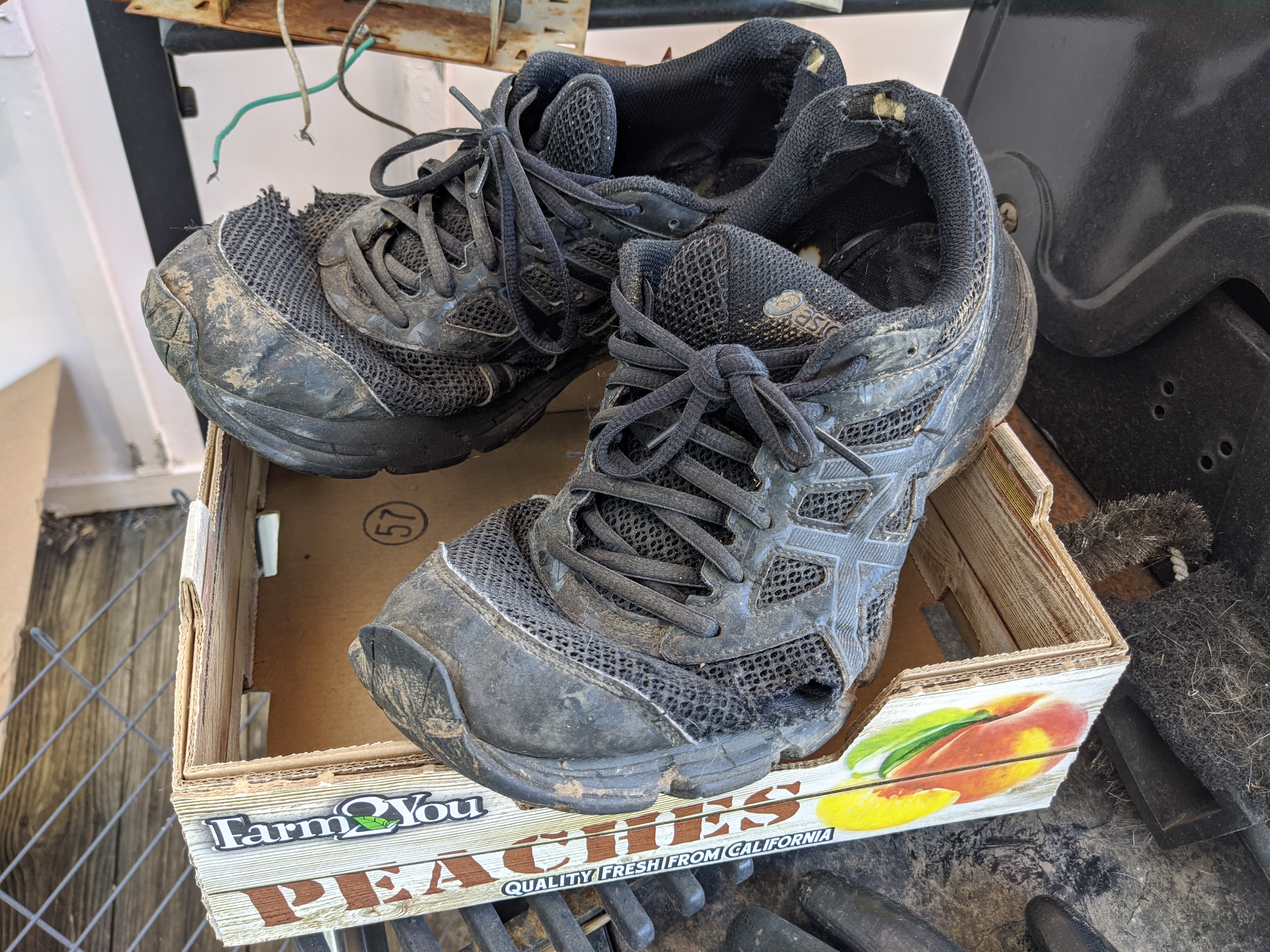
airports are not safe
and distant lands, once again,
are far far away
Jedi council
For obvious reasons, the idea of many people gathering in one place is, at the moment, not so attractive. This changes the relative benefits of meeting in the same place physically versus virtually.
While it is not clear at the moment just how things will get with this virus, one short term prognosis is already clear: Try to stay away from crowds.
To that end, we’ve been starting to think of our research in this area in terms of the Star Wars Jedi council: You want everyone to be in their own body, and to have the feeling of being in the same physical place.
But they don’t actually need to literally be in the same physical place. They might, or might not. The point is that, as much as possible, it shouldn’t matter.
To me that seems like a pretty cool stretch goal.
Clever strategy
I’m surprised to see so many headlines declaring that Michael Bloomberg failed. Apparently the idea is that since he spent $500M and did not secure the Democratic nomination, he is a loser.
But I see it quite differently. The man set out to achieve something, and he succeeded spectacularly in his goal.
His stated goal was to stop the current inhabitant of our White House from being reelected. Clearly he would also want to help flip the Senate away from Republican control. Both of those things are much more likely to happen with Biden rather than Sanders as the Democratic torchbearer.
So he made a big noise, turned himself into a target, and got Elizabeth Warren and others to focus their attacks on him. By doing that, he allowed Joe Biden to arrive at Super Tuesday unattacked and unscathed.
Now Biden (whom Bloomberg likes) is ahead of Sanders (whom Bloomberg dislikes). In addition, Biden, being a moderate, is far more likely than Sanders to help win Democratic Senate seats in November.
And of course Bloomberg has wholehearted thrown his support (and his very large pocketbook) behind Joe Biden. I think the whole thing was absolute genius.
Future object appearance
Continuing the theme from yesterday, let’s posit for a moment that we are actually living in the world described by Vernor Vinge in his novel Rainbows End. Everyone is wearing augmented reality contact lenses, and the world around us looks like whatever we each want it to look like.
Yet that world will still be physical. A knife could still hurt you, and a cool glass of water will still be refreshing.
Will we gradually see a divergence from physical essence and subjective appearance? Will the actual appearance of manufactured physical objects gradually cease to matter, once we are all looking at them through our contact lenses?
Will the true appearance of a future coffee table or a grand piano actually be drab and nondescript, once nobody is looking at the naked object itself? Will people cease to hang pictures on their walls, once a framed picture can simply be “dropped in” to any room as a virtual object?
After all, we don’t decorate the electrical wires that run behind our walls, or the pipes that carry water to our kitchen sink. Nobody ever looks at those things, unless they are an electrician or a plumber.
Appearance modulation
Let’s say we all suddenly acquired the ability to modulate our physical appearance. In order to remove any inessential issues about technology, imagine we were all given the superpower that Mystique has in the X-Men universe.
What would end up happening? Would appearances converge or diverge? I can imagine a boring scenario in which large numbers of people simply choose to look like their favorite pop star.
But perhaps people will be more adventurous than that. Maybe appearances will start to diverge, in some interesting and exciting way.
Wouldn’t it be cool if people were to experiment with new forms of physical presentation. Clothing choices might end up being just one among many aspects of future fashion.
On-line virtual communities have already been playing around with some of these capabilities for quite a while. But I have a feeling the results would be different if those same capabilities were to suddenly show up out here in the physical world.
Dealing with the inner child
Yesterday I acted irrationally angry toward somebody whom I love very much. We both realized afterward that it was what is colloquially called my “inner child” who was throwing the tantrum.
That realization does not take away from the destructiveness of the moment. We all have a part of ourselves that is small and scared and still dealing with issues from a long-ago time. Yet we are also adults, with a responsibility to be kind to one another.
As we seek to protect our inner child, we need also to engage it, to speak with it honestly about what is causing us stress. If we try to simply protect it from all stress, eventually the child will react unfavorably to being removed from the conversation, and the result will not be pretty.
I am going to seek to do better to figure out how to talk honestly, yet of course gently, with my inner child, about the issues that cause me grief in my adult life. That is, in any case, far better than finding myself watching helplessly as my inner child, feeling unheard, lashes out at somebody else.
First case
Oddly, I had already opened up my computer and was just about to start typing the post of the day when I heard the news. The first confirmed case of coronavirus in Manhattan was announced this afternoon.
The woman has been quarantined in her apartment, and testing of people who show symptoms is continuing. Nobody seems to exactly what this means.
Perhaps it would be best not to say too much more on this subject until there is good news to report. Let us all hope for better news in the days ahead.
End of an era
Today I was behind another guy in line at the local CVS. As the teller was handing the man his plastic bag, he told the customer that today was the last day that CVS would be providing plastic bags.
“Starting tomorrow,” he explained, “we will provide paper bags, if you need one, for a charge of five cents per purchase.”
The man looked at the plastic bag in his hand thoughtfully, and then a big grin broke out on his face.
“So this isn’t just a bag,” he said happily. “It is now a valuable historical artifact.”
Inflection point
For any technology, there is a point of inflection. That is the moment at which it transitions from a curiosity to a fundamental part of our everyday reality.
You can go back through history and identify the inflection point for various technologies. Some examples that come to mind are mass publishing, universal air conditioning, radio, cinema, television, the Web, SmartPhones and more.
Clearly every inflection point has a “before” and an “after”. Yet it may not always be obvious what is the decisive moment when everything flips.
I wonder whether there is a formal way of defining the inflection point for mass adoption of a technology.
In recent days
As I talk with people in recent days, I sense a sort of amorphous fear underlying every conversation. People try to be chipper, to stay on message, but everyone knows what is nagging at the edges.
Nobody knows what is going to happen with the coronavirus. People obsessively look at the news, pore over those world maps with the little colored dots on them, and hold hushed conversations.
The outbreak is already a terrible tragedy — every senseless death is a tragedy. But the potential is there for a much larger tragedy.
We need to not let this overwhelm us, and of course we should hope for the best. But we also need to be prepared. And when it counts, we will need to remember to help each other.