I love to travel. But I also love returning to New York City, and being reminded all over again that the city I call home is a living, breathing, ever-changing glorious work of art.
Because the future has just started
I love to travel. But I also love returning to New York City, and being reminded all over again that the city I call home is a living, breathing, ever-changing glorious work of art.
A while back I had the pleasure of spending some time with astronauts. When you spend any time talking with astronauts, the ones who have actually spent time up in outer space, you come away with a different view of things.
The astronauts and cosmonauts who have spent time together on the International Space Station see the world differently than the rest of us, quite literally. For one thing, their flight takes them around the Earth once every 92 minutes.
These are all highly trained engineers, with an extremely practical bent. Yet they report that the experience changes them on a deeper level than mere intellect, both politically and spiritually.
When they look down toward the surface, they do not see borders between countries. Rather, they see a beautiful and highly fragile planet, a unified thing of pure beauty.
They come to stop thinking of themselves as “American” or “Russian”, and to begin thinking of themselves as one with all of their fellow human beings. Apparently it is impossible to remain nationalistic or to emphasize tribal differences after you have had such a profound experience.
Maybe a good use for shared VR would be to give an experience like this to other people, starting with the politicians of our respective nations. It’s a long shot, but if it works, we might just end up saving both our planet and ourselves from destruction and tragedy.
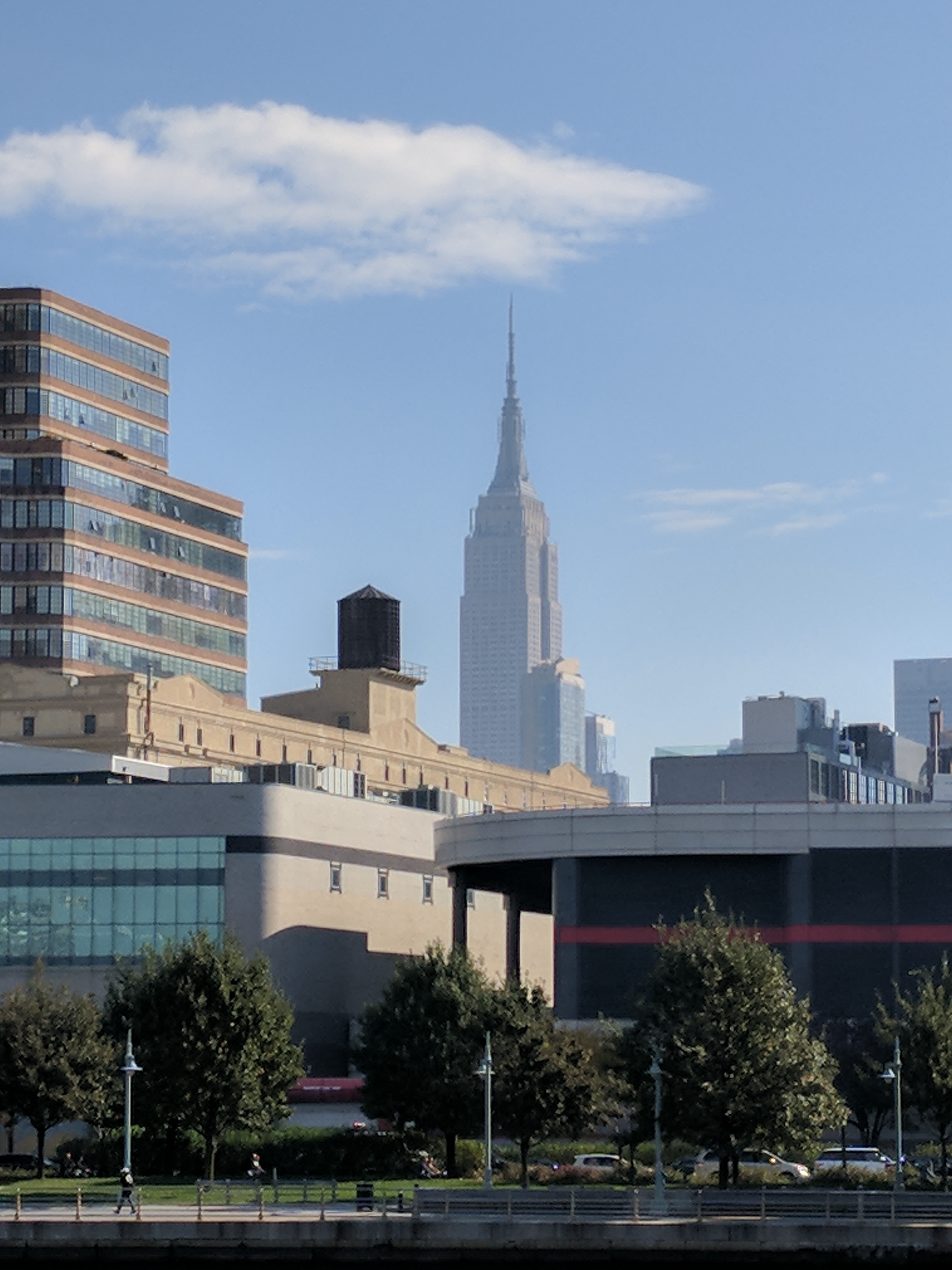
Shortly before I left NYC I took a photo of the front entrance to the building where I live. I think it gives a good sense of New York City charm.

This week I stayed at the house of a friend in LA, and took this photo in the back yard of their family home. Even on a rare rainy day in the City of Angels, I think it gives a good sense of Southern California charm:
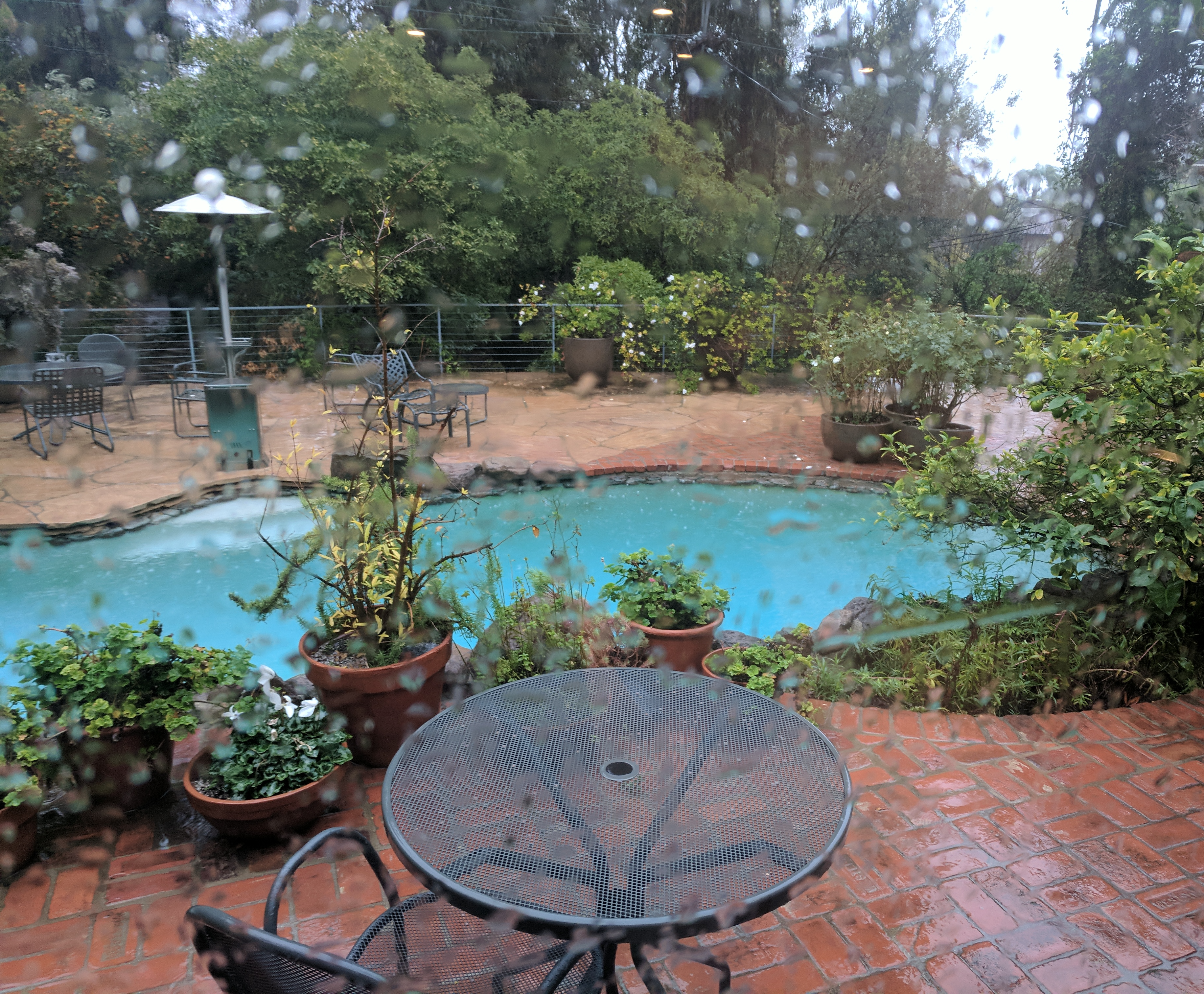
Both are wonderful, albeit in very different ways. It’s very nice to have the opportunity to compare and contrast. 🙂
Today we visited the Walt Disney Company. One of the highlights for me whenever I am here is the magnificent artwork on the walls.
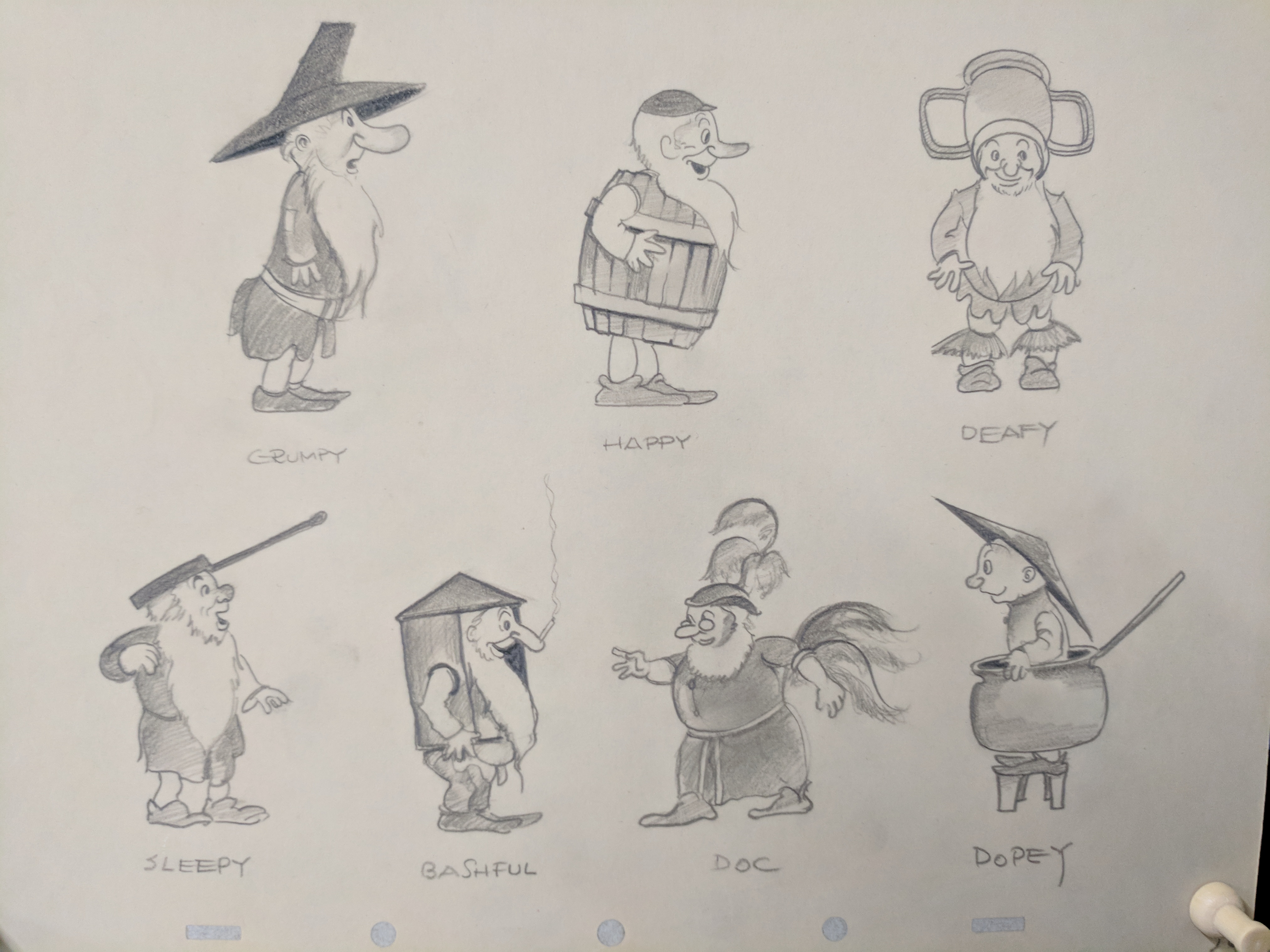
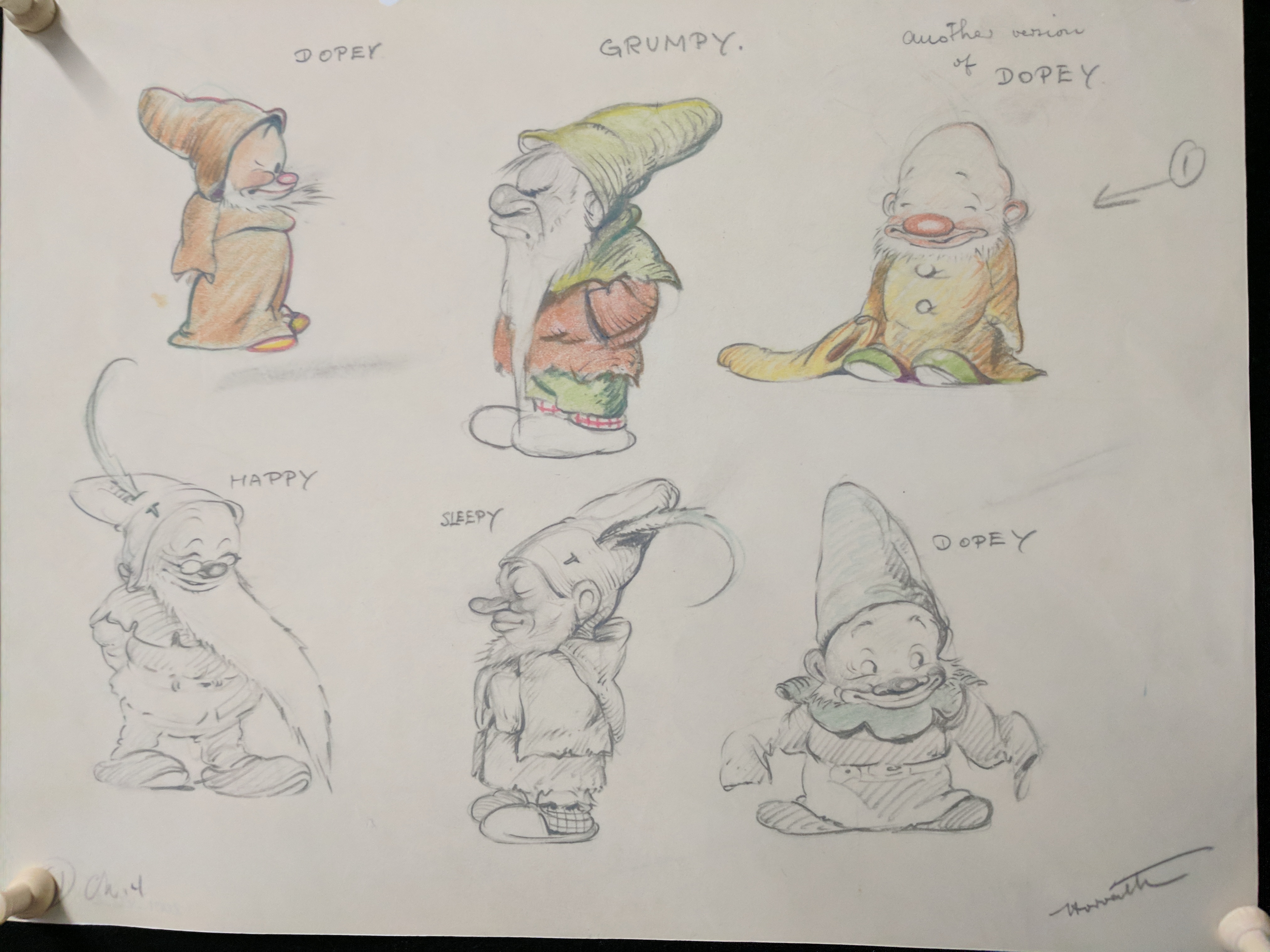
I love the incredible cels and background paintings, but even more, I love the images that show the creative process at work. For example, today I saw two images that showed the visual evolution of the seven dwarves in Snow White.
Here is an early concept drawing. This gives a sense of the visual concept of the seven dwarves relatively early in the process:
And here is a concept drawing much later in the process. This is very close to the final concept of the characters as seen in the film itself:
It is a wonder and a privilege to have the opportunity to see the minds of great creators at work. It is always delightful to enjoy the fruits of crative genius, but it is also good sometimes to simply celebrate the process.
Today some of us visited Unity 3D headquarters. We showed them our CAVE shared-VR storytelling experience. They really liked it, which made us very happy.
After all, we use their software in most of our research, and they are an industry standard. We definitely want to collaborate with them, and today was a very good step toward making that happen.
Yet one must always be cognizant of the cultural differences between research and industry. As we were packing up to leave, I spotted something which highlighted that difference for me.
I called over my colleagues and pointed it out to them. “This,” I said, “shows that these people take their production deadlines a lot more seriously than we take ours.”
I was pointing out a perk available to all employees at Unity, and definitely not available in our lab at NYU: Shower stalls.
Showers seem like a nice perk for employees, but the big winner is the company. When you really need to make that deadline, you can just work around the clock, without ever needing to go home at all.
These people are clearly serious about deadlines.
I was talking to my class today about possible future scenarios for wearables, and the question came up about what people will do with their hands.
As cool as it looks, the whole Tom Cruise in Minority Report scenario doesn’t seem plausible. Most people get tired after holding their arms up in the air for even a little while.
One question that came up was whether we would be holding something. People these days are used to holding a SmartPhone, which they use as both an input and an output device.
But what happens if you already have a perfectly good output device — those cyber-glasses perched on your nose. Do you still want to hold a phone in your hand?
Very likely, we concluded, because a device in your hand will still be useful for input. After all, our hands are wondrously dextrous, and extremely well suited for manipulating tools.
So why not, as we march resolutely into that brave new mixed reality future, give our hands some new tools to manipulate?
I love the sheer variety of ideas that are coming out of our Future Reality Lab these days. Every day somebody else blogs about whatever idea or project is near and dear to his or her heart.
Today it was my turn, and I found it deeply inspiring to be writing in the midst of such amazing intellectual company. But why take my word for it? You can check it out for yourself.
I am one of those weirdly old fashioned people who buys books. Not a few books — lots of books. I even read them.
The downside to this is that books tend to pile up in my apartment. I have far more books than bookshelf space.
I even have LPs and CDs — lots of LPs and CDs. Like I said, I’m old fashioned.
Needless to say, the LPs and CDs pile up right alongside the books. So I decided to do something about it.
Below is what my Sunday project looked like this morning. Just two neatly stacked boxes, containing the promise of organizational bliss.

By early afternoon those tidy packages had been replaced by something a lot messier, as I gradually worked my way through the instructions.
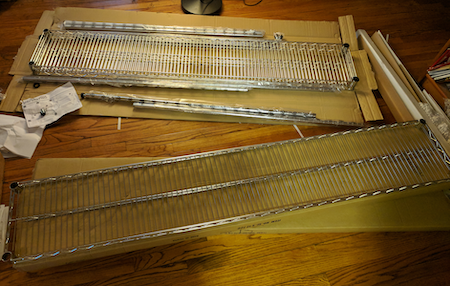
But by this evening, I was the proud possessor of a six foot wide, eight foot high organizational shelf, with two shelves for CDs, lots of room for LPs, and all the extra shelf space I need to show my books some respect. Plus a space underneath for clothes bins and more space up on top for knick knacks.
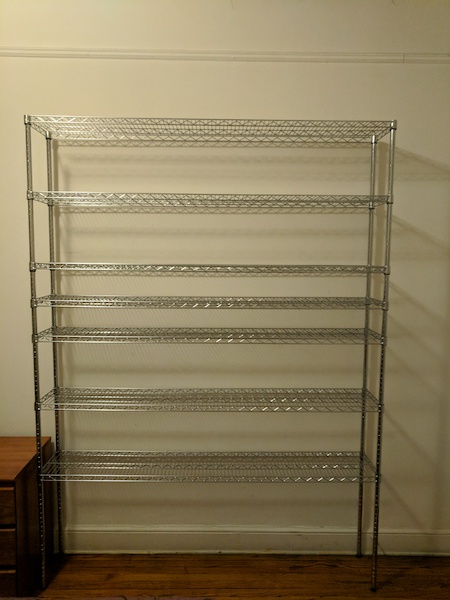
Before getting on with the business of organizing stuff, I am taking a day simply to admire my shiny new shelving. I just love the sheer potentialness of it.
Last month I wrote a short SciFi story on this blog, as a tribute to Mary Shelley’s seminal 1818 masterpiece Frankenstein — arguably the first science fiction story. I tried to stay close to the literary conventions of Regency Era prose, while touching upon various science fiction themes from throughout these last 200 years.
Over the course of that process, I got to thinking about the nature of science fiction. Any SciFi story needs to incorporate science, but aside from that common premise, we see vast differences within the field.
The science fiction of any given era in history reflects the cultural preoccupations — the hopes and fears, if you will — of that era. Science fiction evolves as culture evolves.
I’m thinking it would be interesting to pick a different era in history — say, the 1950s — and construct a new science fiction story around the cultural preoccupations of that particular day and age. By taking us back to the mindset of an earlier era, such a story would itself be a kind of time machine.
And what could be more appropriate than that?
I was talking with a friend today who was sharing with me his thoughts about career plans. He explained that he no longer felt satisfied with what he had been doing professionally for years.
It was a familiar tale. He had been doing the same sort of thing year after year, working with the same sort of people each time. He was now quite good at it, and his skills were much in demand.
But he told me that he no longer enjoyed his work as much has he had before, and he was thinking of making a change. So I shared with him a bit of wisdom.
It was something my dad had told me back when I was a teenager: “If you’re no longer learning anything in your job, then you are in the wrong job.”
At this point in the conversation a woman at the next table jumped into our conversation. “I overheard what you just said,” she told us excitedly, “and that was really great advice.”
“Yes,” I nodded proudly, “my father was a very wise man.”