Imperfect crystals

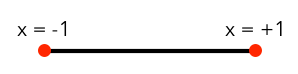
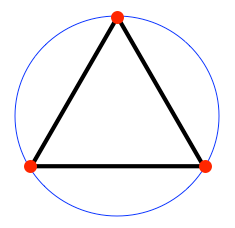
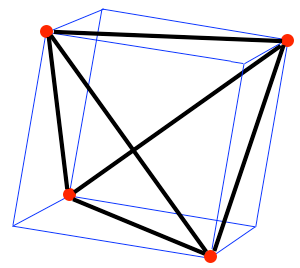
At a meeting I attended earlier this week, a physicist who creates nano-scale materials with novel properties was explaining the intricacies of his research. Apparently, much of what he does is based around creating imperfect crystals, in which the carefully engineered imperfections impart exactly the right properties.

At one point he said: “To make the right imperfect crystal, you first need to figure out how to make a perfect crystal.” And that thought really resonated with me.

In my own work in computer graphics and animation, from texturing to 3D modeling to character animation, that’s one of the fundamental principles. You first need to ask yourself what the “perfect” version would be of, say, a marble texture, or a cloud shape, or a human walk.

Then you need to artfully add imperfections, to match the sorts of imperfections one would expect to see in the real world. In a sense, what people are really looking for is the structure through the noise.

You absolutely must have the structure, whether in an arm gesture or an ocean wave or a wisp of smoke — the perfect crystal. But you must also have just the right amount of imperfection.

Symmetry and noise need each other in all things, including human relationships. The interplay between them is what tells us it’s real.

Fate steps in and sees you through

I realize that it might not win me any coolness points to use a quote from Jiminy Cricket as the title of a blog post. Still, it’s probably the right thought to start off today’s discussion.

I’ve been thinking about fate. A general goes to war, makes some daring decisions based on inspired guesswork, and wins the war. The general is lionized, celebrated as a hero, and goes down in history as a great and inspiring personage.

Another general, in a different time and place, makes essentially the same decisions, based on the same imperfect information, but this time things don’t work out so well. The war is lost, the enemy triumphant. This general is branded as a coward and a traitor — or worse, an incompetent.

We make decisions all the time based on incomplete information, relying on our intuition to fill in the gaps. Sometimes things work out great, and sometimes not so great. Nearly always, we lay the credit or blame at our own feet.

Why do we do this? What is it about our human nature that drives us to insist that everything which happens to us was due to our own agency — either our own genius or our own damned fault?

Maybe, win or lose, life is just more interesting that way.

Definitions of reality, part 2

When I think of discussions about which elements are reality are more important, I think of Coppélia and Avatar. Coppélia was the life-like doll created by the nefarious Doctor Coppélius in a comic ballet based on several stories by E.T.A Hoffmann.

Young Franz, a foolish romantic, falls in love with her. Infatuated by her physical presence, he eventually discovers that she is nothing but a puppet. In the end, he realizes he has been loving an illusion. It is a compelling tale, and I suspect Alex Garland was taking careful notes.

James Cameron’s film contains a nearly perfectly complementary concept: The mind and personality of the crippled human Jake Sully is transferred into the powerful body of a ten foot tall Na’vi. In this new form he becomes the mate of Neytiri, a female Na’vi.

In perhaps the film’s most poignant scene, toward the end of the film Neytiri cradles the tiny crippled body of her human lover, understanding that the soul of the great Na’vi warrior she has come to love resides in this odd and broken little alien creature. Like every other version of the Frog Prince, Avatar raises some very interesting questions about the nature of identity.

The puppet Coppélia and the Na’vi Jake Sully represent two quite different aspects of “reality”. Which one seems more real to you?

Definitions of reality, part 1

I was having a conversation with some students yesterday about possible future technologies, such as contact lenses that will allow everyone to see virtual objects floating in the air. One student took issue with this vision, because he thought that it would take people away from reality.

Not surprisingly, we then had a rousing discussion about what, exactly, constitutes “reality”. And eventually I realized that he and I were talking past each other in a very specific way.

“Reality” can be defined at least two different ways. One definition focuses on the physical: Reality is whatever physically exists, which I can therefore directly experience through my body’s senses. This was the definition the student was assuming.

According to this definition of reality, an experience of going to the theatre is real, in a way that watching a movie is not, because in the former case the actors and the audience physically share the same room.

The definition I was assuming is rather different. To me, the more important part of reality consists of our interaction with other minds. Most often these are human minds, but in some cases those minds can belong to individuals of other species.

According to this definition of reality, an experience of going to the theatre is real, in a way that watching a movie is not, because in the former case the actors and the audience are aware of each other, and therefore their minds have an opportunity to mutually influence each other.

Obviously what I am describing is a continuum. Physical reality and psychological reality are both extremely useful concepts. But which is the more essential?

Box in pocket

Today somebody mentioned those old transistor radios from the 1960s, and how much our relationship with technology has changed since then. But I was struck by quite the opposite thought.

The transistor radio was, first and foremost, a fetish object, a cultural touchstone, a way for a young post-war generation to say “I’m hip, I’m trendy, I’m rock’n’roll.” This was back when rock and roll was much more strongly identified with youthful rebellion.

All you needed to do was carry this slightly expensive yet affordable little box of cutting edge technology in your pocket, and you gained instant street cred. Functionally, the device connected you to the vanguard of communication culture, while its very existence in your pocket connected you to the future.

When considered as a tribal totem, this is exactly the function of today’s iPhone. So from an essentialist perspective, nothing has changed in half a century.

Forcing function

We are supposed to give a demo to a major funder in less than two weeks. So at our weekly lab meeting today, rather than talk about all the cool and crazy projects we might work on, I set the agenda to putting on the best demo we can for this near-term deadline.

It was interesting to see how that changed the dynamics of the meeting. All the things you want in a meeting — people keeping their comments short, staying on message, listening carefully to each other — were amplified. There was no “meeting bloat”.

Of course we can’t spend all of our time in this sort of production mode. If we did, it wouldn’t be a research lab. But I think that sometimes having this sort of “forcing function” is good for us. It gives us concrete goals, a clear context for working shoulder to shoulder, and a sense of satisfaction when it’s done.

And of course it also means that in less than two weeks from now, all of our research hardware and software will be up and running, ready to be used for the rest of the semester. Which may be even more important than the demo. 🙂

Parallels

Dumbledore: An inspiring teacher. In the end it is revealed that he has always been in love with Grindelwald.

Brundledoor: An unsettling creature. In the end it is revealed that he is part Telepod hatchway.

Mumblecore: An independent feature. In the end it is revealed that there is no ending, because we ran out of money.

If your car wore glasses

I was having a conversation last night with an old friend of my mom’s. He was telling me how much more difficult it has become to drive as he has been getting older, because of challenges with his vision.

It’s not that he has any trouble seeing the road. Not at all. It’s more that he needs to wear glasses for near vision — first bifocals and now trifocals — so that he can focus on both the road and the dashboard.

I was very sympathetic. Driving is already difficult enough. It’s even more difficult when you need to tilt your head in just the right way so that you can clearly see both the world outside and the speedometer on your dash.

I told him that they ought to make an overlay for the dashboard that changes its focus — so that you can see everything on your dash clearly using your distance vision. Not corrective lenses for the driver, but rather corrective lenses for the car.

After all, why should you need to wear glasses, when it would all work so much better if your car wore glasses instead?

Erdős-Bacon number

This morning I was curious to see whether there was such a thing as an “Erdős-Bacon number” — the sum of one’s Erdős number and one’s Bacon number. Sure enough, there is a Wikipedia page about it.

I would have assumed that I don’t have an Erdős–Bacon number, since I’ve never appeared in a Hollywood film, and therefore don’t have a Bacon number. But apparently the rules are relaxed for Erdős–Bacon numbers, to include any shared role in a film. For example, Ken Goldberg is said to qualify in the “Bacon” part of an Erdős–Bacon number because he was a co-writer of a documentary in which an actor appeared who also worked with Kevin Bacon on another film.

So by that definition I have an Erdős–Bacon number of five: I’ve co-authored with Jack Schwartz, who has co-authored with Donald Newman, who co-authored with Paul Erdős. And I share a film credit with Jeff Bridges, who also appeared on a different film with Kevin Bacon.

According to the Wikipedia, the only person in history with a lower Erdős–Bacon number than mine is Carl Sagan, and I’m ok with that.

Although I am probably not going to turn down any offers to work on a film with Kevin Bacon. 🙂